How to tell which roof you have
Most homeowners already know, but it is worth being precise, because it changes what a roofer looks for.
- Concrete tile is the most common tile in Inland Empire tracts. It is thick, often with a flat or gently curved "S" profile, and comes in many colors that can fade over decades.
- Clay tile is the classic terracotta barrel or "S" tile seen on Spanish and Mission Revival homes. The color runs through the tile and it tends to keep its color.
- Asphalt shingle is the flat, layered roofing seen on ranch homes, Craftsman bungalows and many newer tracts. Most today are "architectural" or laminated shingles with a textured look.
- Flat or low-slope roofs look level from the street, though they are built with a slight fall to drains or scuppers. They are common on additions, patio covers, porches, some mid-century homes and small commercial buildings.
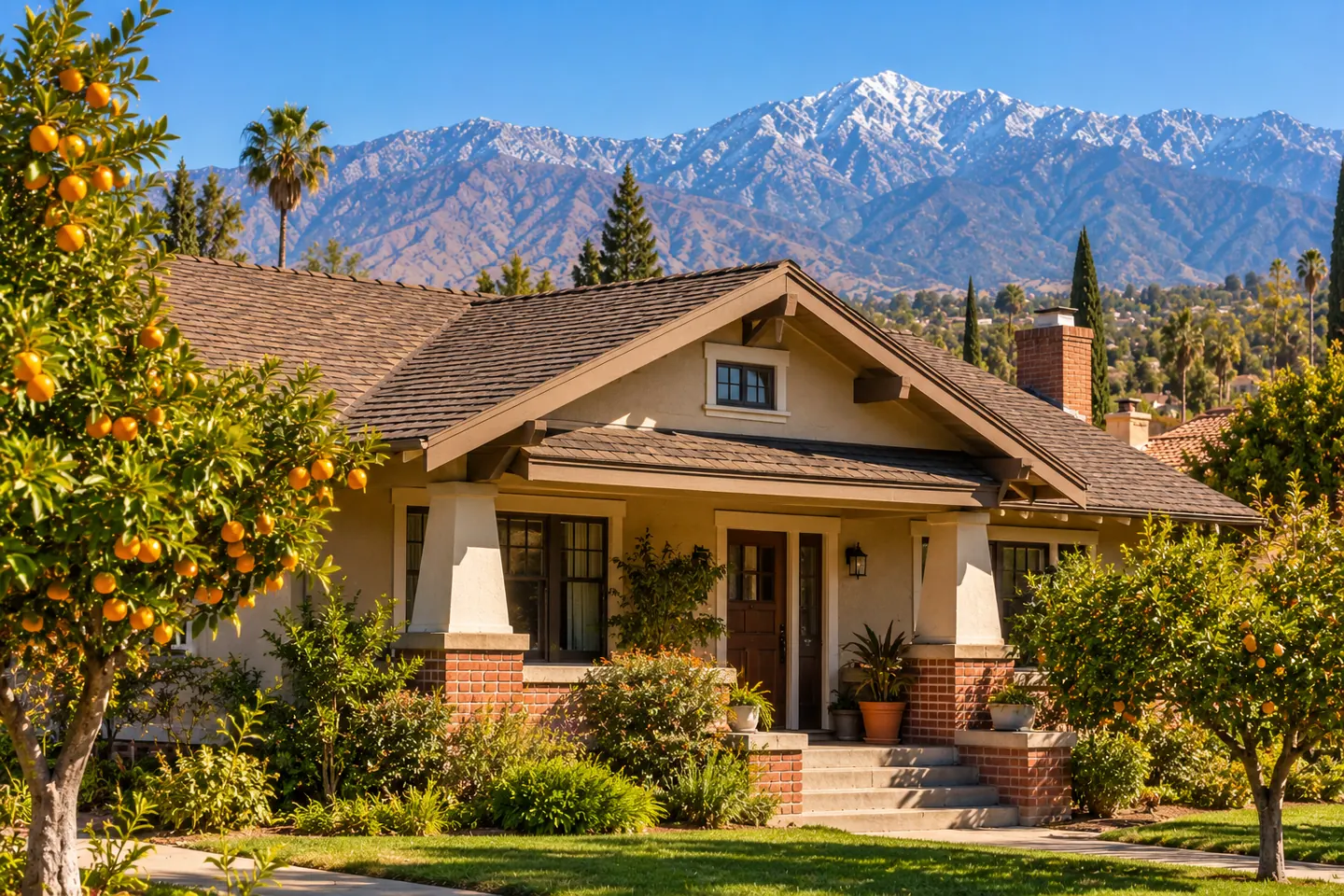
Tile roofs
A tile roof is really two roofs. The tiles on top shed most of the rain and take the sun. Beneath them is the underlayment, traditionally felt paper and now often a synthetic sheet, which is the actual waterproof layer. The tiles sit on battens or are fastened directly through the underlayment into the deck.
What wears out first. In San Bernardino, it is almost always the underlayment. Summer heat under dark tiles dries and embrittles it, and over the years it cracks, especially along the eaves and in valleys where water concentrates. Because the tiles still look fine, the first sign is often a leak after a heavy storm. Cracked or slipped tiles add to the problem: Santa Ana gusts can move tiles that were not fastened well, and anyone walking on the roof, whether a cable installer, a solar crew or a homeowner cleaning gutters, can crack tiles without noticing.
Repair or replace. Swapping a few broken tiles is a routine repair. If the underlayment is failing across the roof, the usual answer is a lift-and-re-lay: the tiles are removed and stacked, new underlayment and battens go on, and the original tiles go back with replacements for broken pieces. Because concrete and clay tile is so durable, many homeowners can keep their existing tiles. Matching an older tile profile or color for replacements can be the hard part, so ask the roofer how they will source them.
Things to know. Tile is heavy. Adding tile to a house that was not designed for it can require a structural review. And tile roofs should not be walked on casually; the safe way to look at one is from a ladder at the eave or with a roofer.
Asphalt shingle roofs
Asphalt shingles are a fiberglass mat coated in asphalt and topped with ceramic-coated granules. The granules protect the asphalt from ultraviolet light and give the shingle its color. Each course is fastened with nails and held down by a strip of adhesive that bonds to the shingle below once the sun warms it.
What wears out first. Sun and heat. On the south- and west-facing slopes, granules gradually wash into the gutters, exposing the asphalt, which then dries and becomes brittle. Shingles that have lost their flexibility crack when the wind lifts them. Strong Santa Ana gusts out of the Cajon Pass can break the adhesive seal and crease tabs, and once a tab has been creased it can let water in even after it lies flat again. Flashing at chimneys, walls and vents, and the rubber boots around plumbing vents, are the other common failure points.
Repair or replace. A wind-damaged area on an otherwise healthy roof can be repaired by replacing the damaged shingles and resealing. When shingles are brittle and bald across whole slopes, repairs struggle: lifting one shingle to weave in a new one can crack its neighbors. At that point replacement is usually the better investment. A shingle re-roof normally means stripping to the deck, replacing any rotted sheathing and installing new underlayment and flashing along with the shingles.
Things to know. Shingles come in a wide range of colors, and lighter colors stay cooler. Some shingles are rated as cool-roof products, which can matter under Title 24. Attic ventilation has a big effect on shingle life in a hot climate, so a re-roof is the time to get it right.
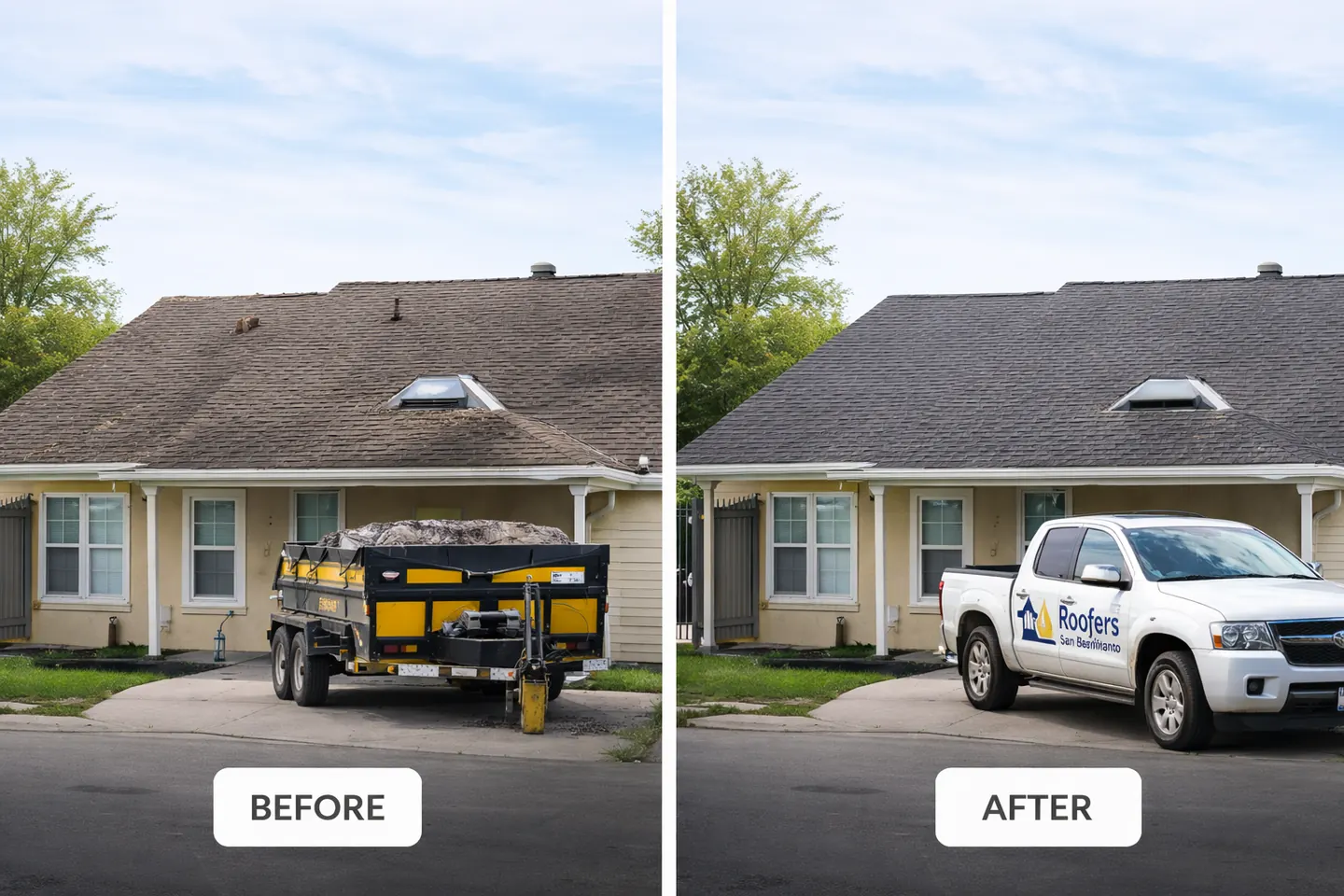
Flat and low-slope cool roofs
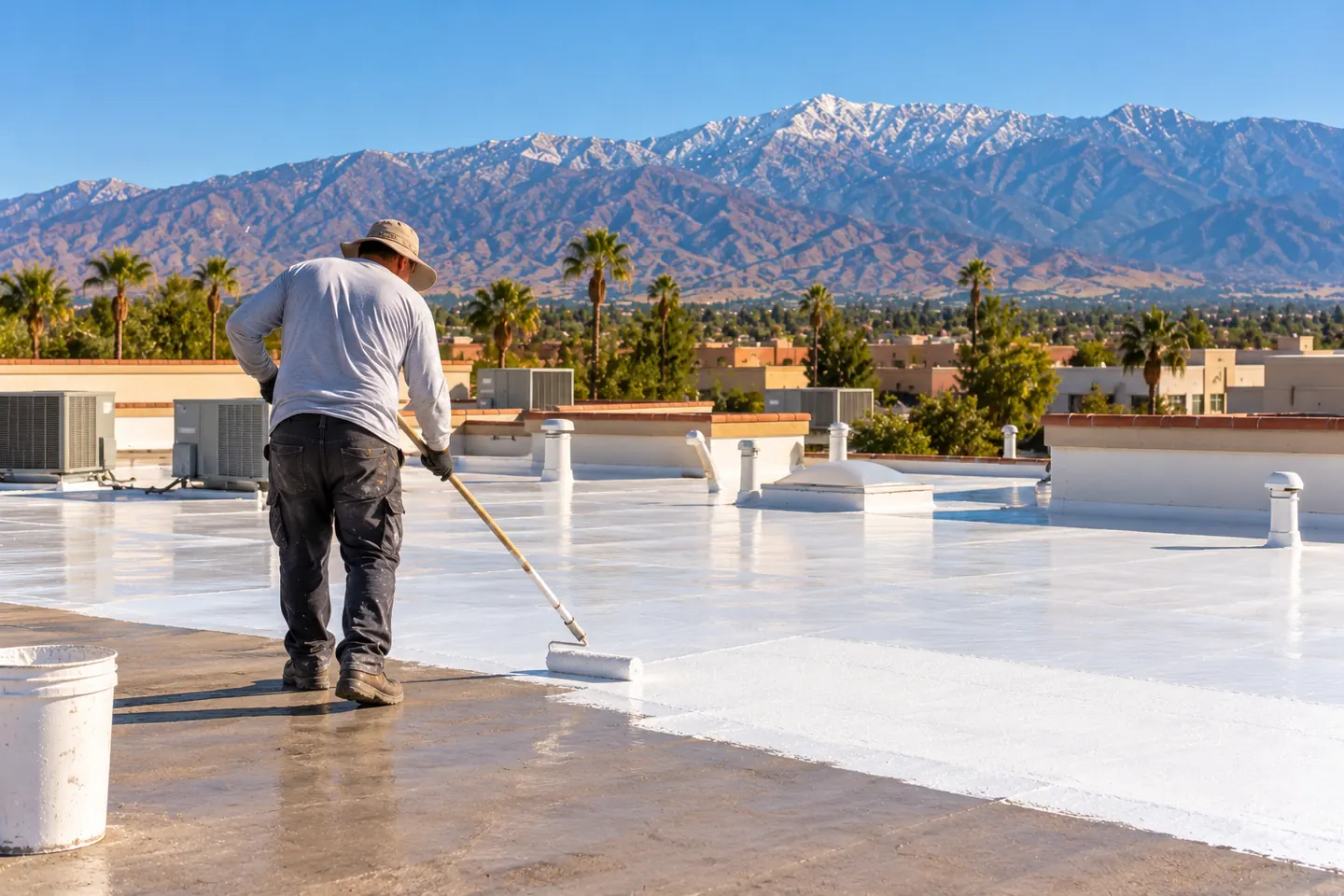
Low-slope roofs cannot rely on gravity to shed water quickly, so they depend on a continuous membrane: a single-ply sheet such as TPO or PVC, a modified-bitumen system, a built-up roof, or a fluid-applied coating over an existing surface. Many low-slope roofs in the Inland Empire are finished in white or another light, reflective color.
What wears out first. Seams, flashing at walls, and the details around vents, skylights, air-conditioning units and drains. Ponding water, where the roof holds puddles for days after a storm, speeds up wear and finds any weakness. Coatings chalk and crack in the sun and need renewing over time.
Repair or replace. If the membrane and the insulation below it are dry, many flat roofs can be repaired by patching seams and penetrations and then recoating. If water has soaked into the layers beneath, recoating traps it, and replacement of the affected area or the whole roof is usually better. Roofers sometimes take a core sample or use a moisture meter to decide.
What makes a roof "cool". A cool roof reflects more of the sun's energy and releases absorbed heat faster than a conventional dark surface. The Cool Roof Rating Council rates products for solar reflectance and thermal emittance. California's Title 24 energy standards, maintained by the California Energy Commission, include cool-roof requirements that can apply when a roof is replaced, depending on climate zone, roof slope and the size of the project. Ask your roofer and your city's building department whether your project triggers them; do not assume either way.
Choosing between them on a re-roof
Most re-roofs here keep the same type of roof, because the framing, the neighborhood's look and often an HOA's rules point that way. When there is a real choice, these are the questions worth asking the roofer:
- Can the structure carry it? Moving to tile from shingle may need an engineer's review.
- What does the HOA or historic review allow? Some Fontana and Highland tracts set materials and colors; some older Redlands neighborhoods have design review.
- What does Title 24 require? Particularly for low-slope roofs and for some steep-slope roofs, depending on climate zone.
- Is the house in a Fire Hazard Severity Zone? Foothill homes may need a specific fire rating for the roof covering.
- How long will you stay? A cheaper roof can make sense on a house you will sell soon; a longer-lived system makes more sense on one you plan to keep.
Whichever you choose, the installation details matter as much as the product. Ask what underlayment is going on, how flashing and valleys will be handled, and how the attic will be ventilated.