
- Typical jobs
- Leak tracing, cracked and slipped tile, wind-lifted shingles, vent boots and flashing, flat-roof seams and coatings, fascia and gutter edges.
- Who does the work
- An independent roofing contractor in your city. Ask for the CSLB license number (C-39 Roofing) and check it.
- When to call
- As soon as you see a stain or drip. Water in the attic spreads along framing and insulation before it shows on the ceiling.
- What to have ready
- Your city, roof type, roughly how old the roof is, where the water shows up, and photos if you can take them safely from the ground.
Roof repair in San Bernardino starts with the cause
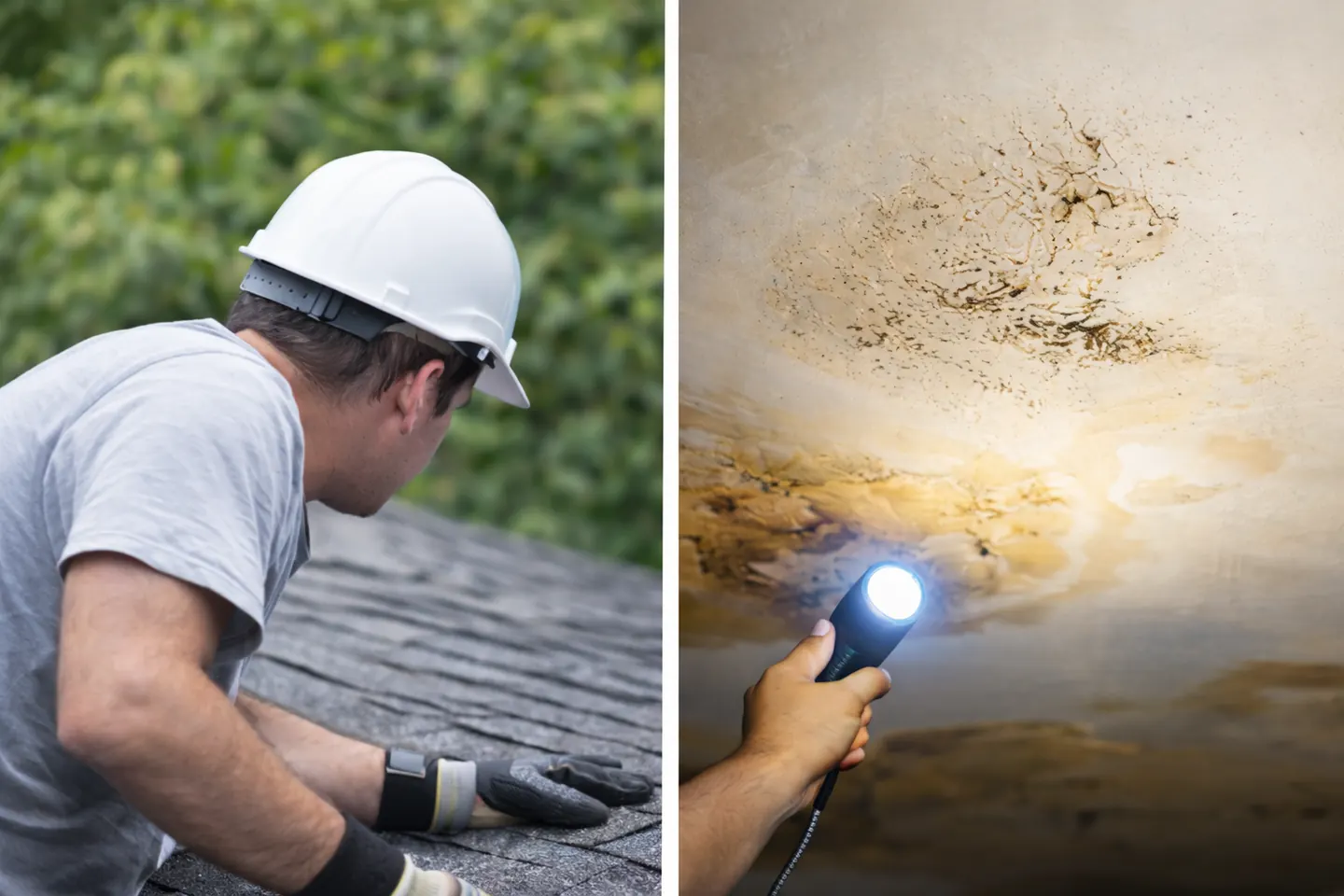
The spot where water drips into a room is rarely the spot where it gets in. Water that slips past a cracked tile or a lifted shingle runs down the underlayment, along a rafter or across the top of the ceiling drywall before it finds a way through. A good roof repair in San Bernardino therefore starts on the roof and in the attic, not in the room with the stain.
When a roofer inspects a leak, they should look at:
- Flashing. The metal around chimneys, skylights, wall junctions and valleys. Old sealant dries and pulls away in summer heat, and many leaks start here.
- Pipe and vent boots. Rubber collars around plumbing vents crack after years of sun. They are a common, inexpensive fix.
- Tiles and shingles near the leak. Cracked tile, slipped tile, missing ridge pieces, lifted or creased shingle tabs.
- Underlayment. On tile roofs especially, the condition of the layer beneath the tiles decides whether the repair is a swap or a lift-and-re-lay.
- Gutters, fascia and roof edges. Water backing up at the eaves rots the fascia board and the lower edge of the deck.
The repairs we are asked about most
Wind damage. Santa Ana winds hit Rialto, Fontana and the north end of San Bernardino hard, and gusts can move tiles, break ridge caps and crease shingles that have lost their adhesive seal. Wind damage is often spotty, which makes it a good candidate for repair rather than replacement.
Leaks after the first storm. After a long dry summer, the first heavy rain of the season finds every weak spot. If the leak is in one area, a targeted repair is usually right. If water is coming in at several places on an older roof, ask the roofer whether the underlayment is reaching the end of its life.
Flat roofs and patio covers. Additions, porches and patio covers are often low-slope, and they are where we hear about ponding water and blistered or cracked coatings. Repairs range from re-sealing seams to recoating the whole surface.
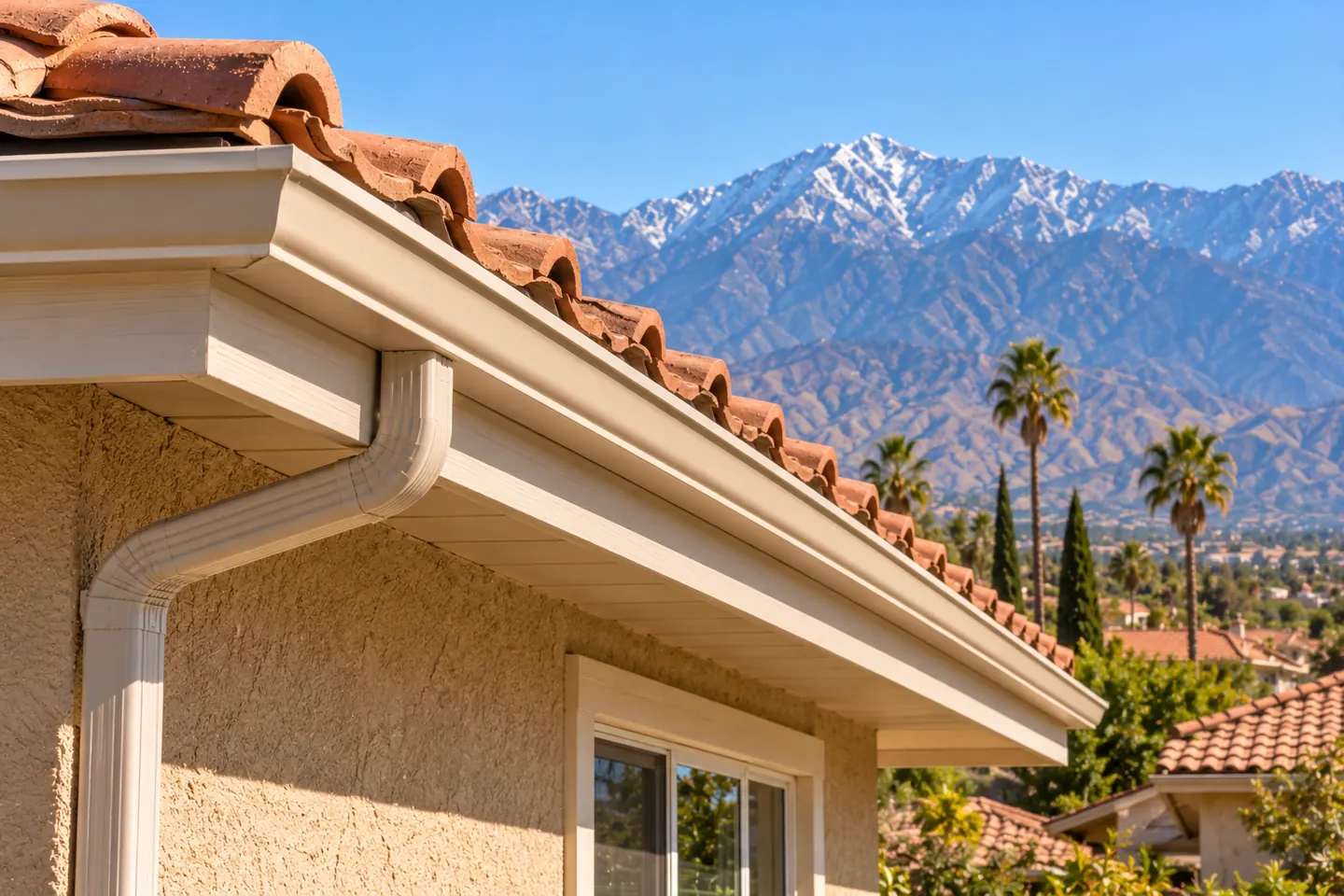
Fascia and gutter edges. Overflowing or loose gutters push water into the fascia and the edge of the roof deck. Rotted fascia should be replaced before new gutters go back on.
Repair or replace?
A repair makes sense when the problem is local and the rest of the roof still has life in it. If the roofer finds the same wear everywhere, such as shingles that crack when bent or underlayment that crumbles across the roof, repeated repairs start to cost more than they are worth. Our roof replacement page explains what a full re-roof involves, and the roof types guide covers how each material ages here.
Checking the roofer before you agree to anything
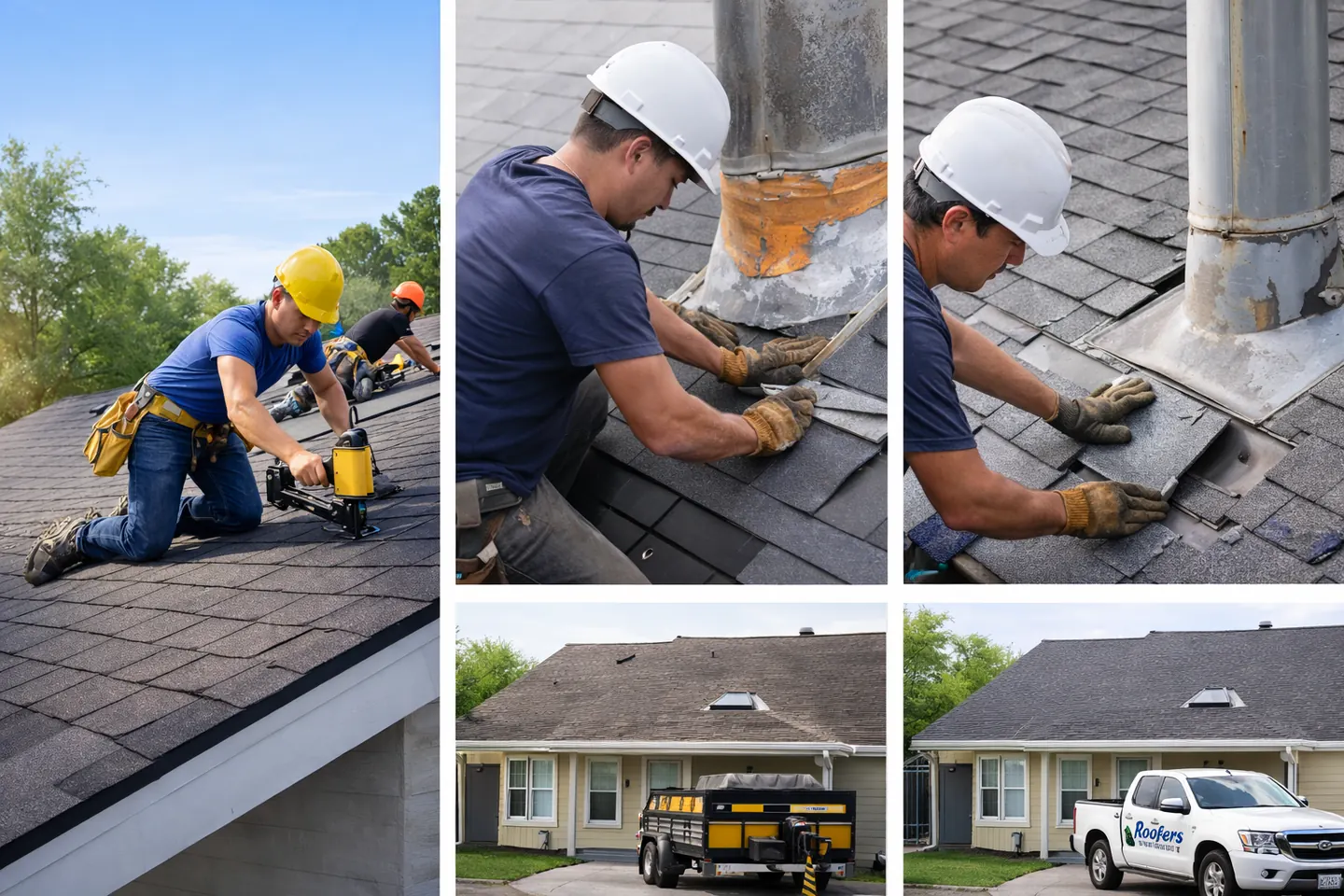
Any roofer you hire should give you a California contractor license number. Look it up on the Contractors State License Board (CSLB) website: it shows whether the license is active, its classification (roofing is C-39), and bond and workers' compensation information. Get the scope and price in writing before work starts, and keep any deposit modest. CSLB publishes the legal limits on down payments for home improvement contracts, and they are worth reading before you sign.
What your roof repair quote should include
- The cause of the leak or damage, not just where the water appeared inside
- Exactly what will be removed and replaced: number of tiles or squares of shingle, length of flashing, area of membrane
- Whether underlayment will be replaced under the repaired area, and with what
- How matching tiles or shingles will be sourced, and what happens if an exact match is not available
- Any rotted decking or fascia found once the roof is opened, and how that extra work will be priced
- Clean-up, haul-away and protection of gutters, plants and walkways
- What warranty the contractor offers on the repair, in writing
For what moves the price up or down, read roofing cost in San Bernardino. Before signing, look the contractor up on the CSLB license check.
How roof repair differs by roof type
| Roof | What to expect |
|---|---|
| Concrete or clay tile | Broken tiles are swapped and slipped ones reset. If the underlayment under them has failed, a proper repair lifts the tiles in that area, replaces the underlayment and re-lays the same tiles. |
| Asphalt shingle | Damaged shingles are cut out and new ones woven in and sealed. On a roof with brittle, bald shingles, repairs can crack the surrounding shingles, which is a sign the roof is near replacement. |
| Flat or low-slope | Seams, blisters and penetrations are patched with material that is compatible with the existing membrane. Ponding areas may need drainage changes, and coatings can be renewed if the membrane underneath is dry. |
Not sure which you have? Compare tile, shingle and flat cool roofs.
Common questions, plain answers
Can you fix a roof leak during the rainy season?
Roofers can usually make an emergency tarp or temporary seal during a storm and come back for the permanent repair when the roof is dry. Most roofing materials and sealants should not be installed on a wet surface, so ask the contractor what they will do now and what they will finish later.
Why does my tile roof leak when none of the tiles are broken?
Tiles shed most of the water, but the underlayment beneath them is the real waterproof layer. In Inland Empire heat that layer dries out and cracks over time, and wind-driven rain gets past the tiles to reach it. A roofer will often lift a few tiles to check it.
Is a small roof repair worth doing on an old roof?
Often, yes, if the rest of the roof has a few years left. If the roofer finds the same failure across the whole roof, such as cracked underlayment or brittle shingles everywhere, it may be better to plan a replacement and only make a temporary repair now. Ask them to explain which situation you are in.
Do I need a permit for a roof repair in San Bernardino?
Small repairs often do not, but re-roofing and larger repairs usually do. The threshold is set by the city's building rules, so ask your contractor and, if in doubt, check with the City of San Bernardino's building and safety office or the city where the house is.
Will homeowners insurance pay for my roof repair?
It depends on the cause and your policy. Sudden damage, such as wind or a fallen tree limb, is treated differently from wear and age. Photograph the damage, read your policy and talk to your insurer. A roofer can document what they find, but only your insurer decides coverage.