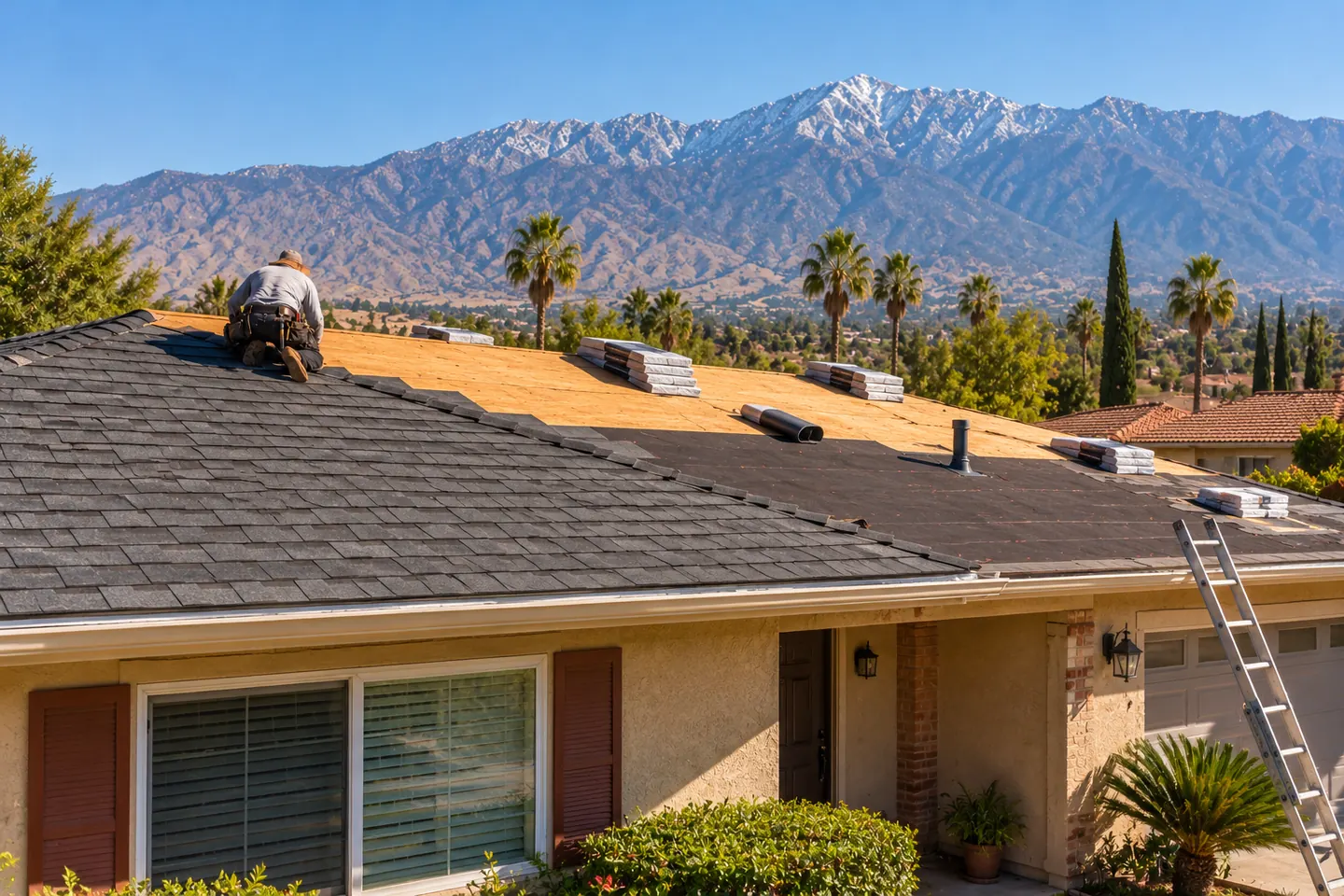
- When it makes sense
- Widespread leaks, brittle or bald shingles across whole slopes, failed underlayment under a tile roof, or a soft, sagging deck.
- Main options
- New asphalt shingle, new concrete or clay tile, lifting and re-laying existing tile over new underlayment, or a new low-slope membrane.
- Paperwork
- A building permit is normally required, and the contractor usually pulls it. Energy-code and fire-zone requirements may apply.
- Best timing
- Spring through fall is easiest. Winter jobs are possible, but storms can stretch the schedule.
When roof replacement in San Bernardino is the right call
Nobody wants to replace a roof sooner than they have to, and an honest roofer will tell you when a repair will do. Replacement becomes the better answer when the problems are spread across the roof rather than in one spot. Signs a roofer will look for include:
- Shingles that are bald, curled or brittle across whole slopes, especially those facing south and west where the sun is strongest.
- Leaks in several places on a tile roof with its original underlayment. Once that layer starts to crack from heat and age, it tends to fail everywhere.
- Soft or spongy areas underfoot, which point to water-damaged sheathing.
- Repeated repairs in different places over the last few winters.
- Daylight in the attic, or stains on the underside of the deck across a wide area.
What happens during a re-roof
A replacement is more than a new surface. For a shingle roof, the crew strips the old roofing down to the wood deck, which lets them see and replace any rotted sheathing. New drip edge, underlayment and flashing go down before the new shingles. Ridge vents, vent boots and other details are replaced along the way. For a tile roof, the crew may remove and stack the existing tiles, install new underlayment and battens, and then re-lay the tiles, or switch to new tile altogether.
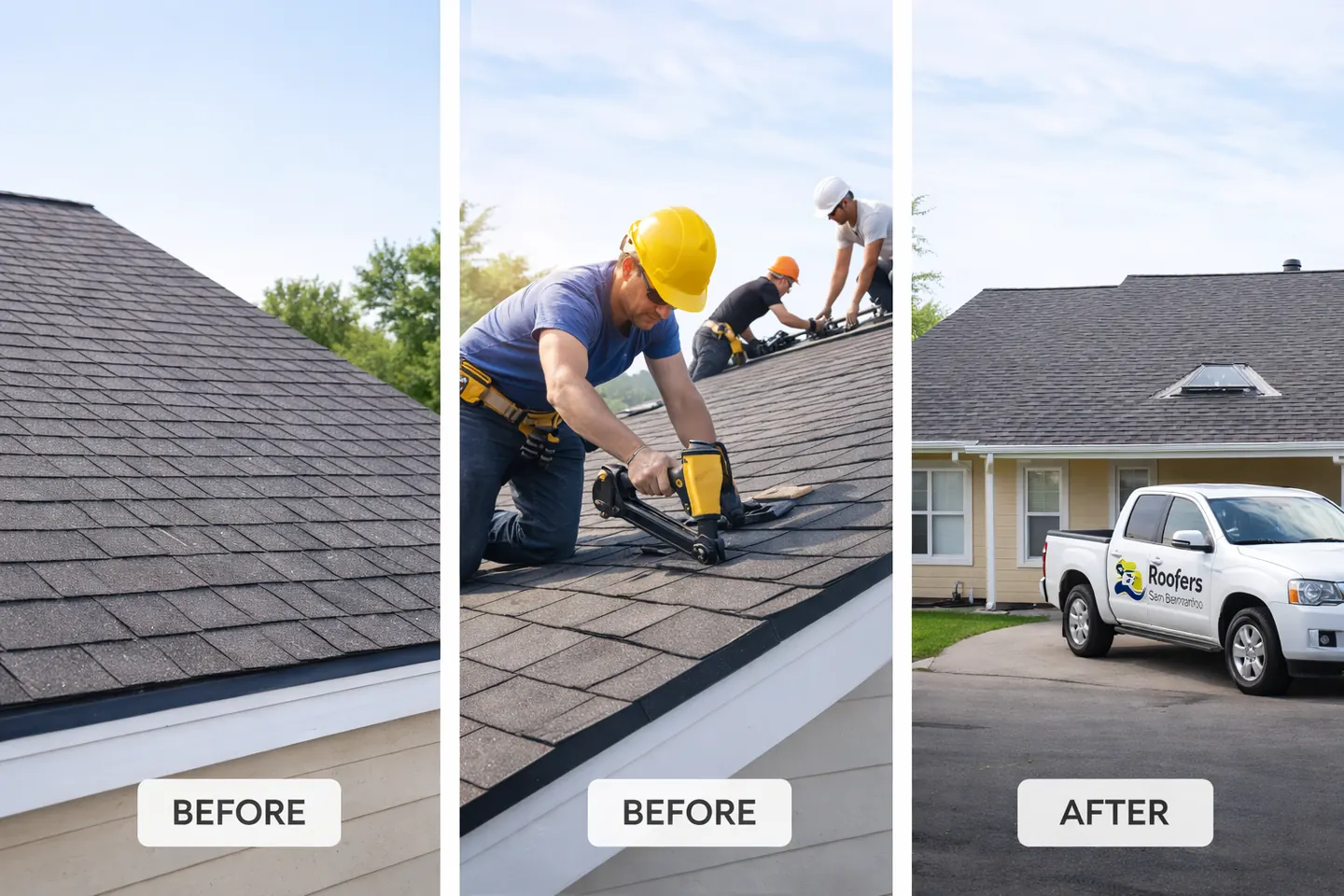
Ventilation deserves attention during a replacement. A hot, poorly vented attic shortens the life of shingles and underlayment and makes the house harder to cool in summer. Ask the roofer whether the attic has enough intake at the eaves and exhaust near the ridge, and what they would change.
Permits, Title 24 and fire zones
Re-roofing in San Bernardino and the surrounding cities generally requires a building permit, with an inspection during or after the work. The contractor normally pulls the permit, but confirm that in writing.
California's Title 24 energy standards, published by the California Energy Commission, can require a cool roof on some re-roofs. Whether yours is covered depends on the climate zone, the slope of the roof and how much of it is being replaced, so treat it as a question for your contractor and the city's building department rather than an assumption either way.
Homes in the foothills above San Bernardino, Highland and Yucaipa may also sit in a Fire Hazard Severity Zone mapped by CAL FIRE. In those zones, the California Building Code sets fire-resistance requirements for roof coverings. The quote should state the fire rating of the product being installed.
Picking a material
Asphalt shingle, concrete tile, clay tile and low-slope membranes all have a place in this valley. The best choice depends on the existing structure, the look of the neighborhood, any HOA rules, and how long you plan to stay. Our comparison of tile, shingle and flat cool roofs goes into detail, and our roofing cost page explains what moves the price. If you are not yet sure whether you need a replacement at all, start with roof repair.
What your roof replacement quote should include
- Tear-off or overlay, and how many existing layers are being removed
- The new roofing material by brand and product line, color, and fire rating
- Underlayment type, and where ice-and-water or self-adhered membrane will be used, such as valleys and around penetrations
- Allowance and unit price for replacing damaged decking once the old roof is off
- New flashing, drip edge, vent boots and ridge or hip details
- Attic ventilation: intake and exhaust, and whether it is being changed
- Permit, inspections and who pulls the permit, plus any Title 24 cool-roof product requirement
- Disposal, magnet sweep for nails, protection of landscaping, and the written warranty from both contractor and manufacturer
For what moves the price up or down, read roofing cost in San Bernardino. Before signing, look the contractor up on the CSLB license check.
Replacement options by roof type
| Roof | What to expect |
|---|---|
| Shingle to shingle | The most common re-roof. The old shingles are stripped to the deck, damaged sheathing is replaced, new underlayment and flashing go down, then new shingles. Many crews finish an average house in a few days of dry weather. |
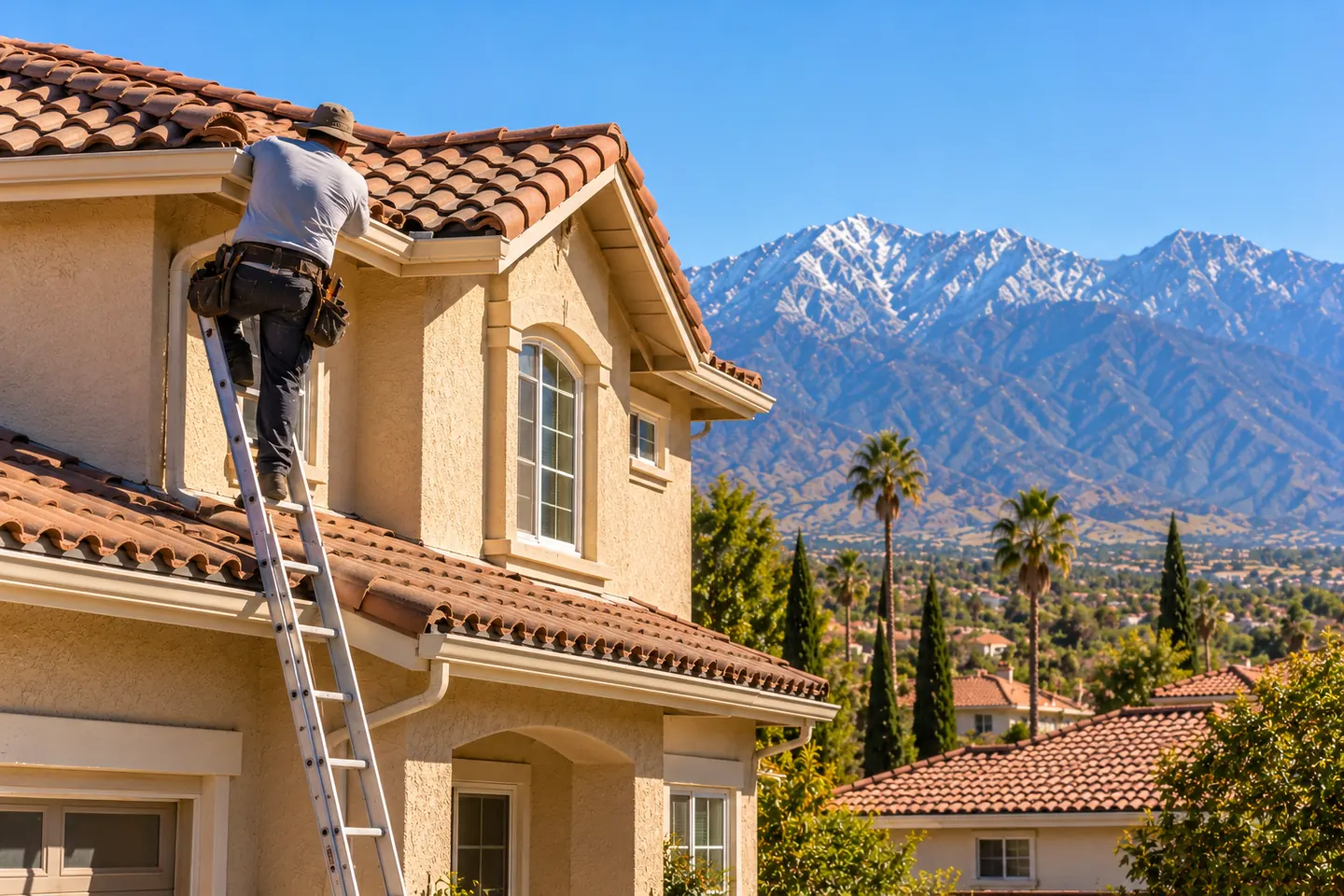
| Tile lift and re-lay | When the tiles are sound but the underlayment has failed, the tiles are removed and stacked, new underlayment and battens go on, and the original tiles are re-laid with replacements for broken pieces. |
| New tile | Concrete or clay tile is much heavier than shingle. Switching to tile from a lighter roof can require an engineer's review of the framing, so ask before you choose it. |
| Low-slope membrane | Flat sections are usually re-roofed with a single-ply membrane or a built-up or modified-bitumen system. Light-colored, reflective surfaces are common and may be required by Title 24. |
Not sure which you have? Compare tile, shingle and flat cool roofs.
Common questions, plain answers
How long does a roof replacement take?
A typical single-family shingle re-roof is often done in a few working days once materials are on site. Tile lift-and-re-lay jobs and larger or steeper roofs take longer. Weather, permit inspections and any rotted decking found during tear-off can extend the schedule. Ask the contractor for a written start and completion estimate.
Can new shingles go over my old roof?
Building codes allow a limited number of layers in some situations, but an overlay hides the condition of the deck and adds weight. Many roofers recommend a full tear-off, especially on older San Bernardino homes. Ask the contractor what code allows for your roof and why they recommend one or the other.
Do I need a cool roof when I replace my roof?
Possibly. California's Title 24 energy standards, set by the California Energy Commission, include cool-roof requirements for some re-roofing projects, depending on climate zone, roof slope and how much of the roof is replaced. Your contractor and the city's building department can tell you whether it applies to your home.
Can I reuse my roof tiles?
Often, yes. Concrete and clay tiles commonly outlast the underlayment beneath them. In a lift-and-re-lay, the roofer removes the tiles, replaces the underlayment and battens, and puts the tiles back, replacing broken ones. Matching older tile profiles can be difficult, so ask how they will handle breakage.
What if my home is in a wildfire hazard zone?
Homes in a mapped Fire Hazard Severity Zone may have to meet fire-resistance requirements for the roof covering under the California Building Code. CAL FIRE publishes the zone maps. Your roofer and the city's building department will confirm what rating your new roof needs.