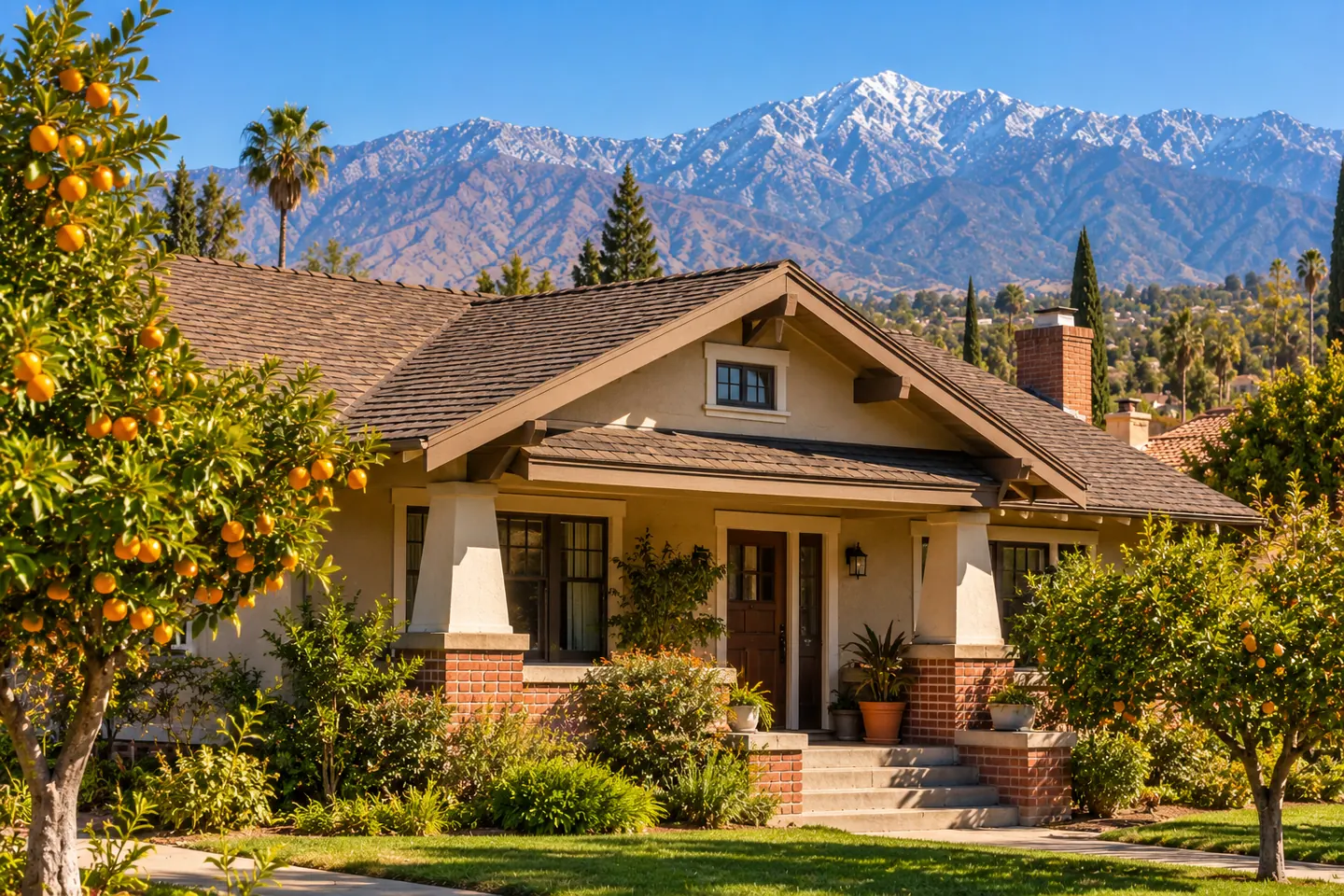
Cities at a glance
| City | Setting | Roofs you see most |
|---|---|---|
| San Bernardino | Valley floor up to the foothills | Shingle on older homes, tile on hillside tracts |
| Highland | Foothills and the Santa Ana River wash | Concrete tile in planned tracts, shingle on older lots |
| Redlands | Historic core, citrus hills to the south | Shingle and wood-look on Craftsman and Victorian homes, tile on newer streets |
| Rialto | West valley, in the Cajon Pass wind path | Shingle on mid-century ranch homes |
| Fontana | Large city from the I-10 to the foothills | Tile in HOA tracts north of the 210, shingle and low-slope to the south |
| Colton | Rail town south of San Bernardino | Shingle on older cottages, tile toward Reche Canyon |
| Loma Linda | University town with hillside streets | Tile and low-slope on condos and townhomes |
| Yucaipa | Higher ground at the east end of the valley | Shingle, tile and manufactured-home roofs |
San Bernardino
The city of San Bernardino runs from the older grid around downtown up to the foothill neighborhoods of Verdemont and the streets around Cal State San Bernardino. Roofs follow that spread. Near downtown and in neighborhoods built before the 1960s, many homes are small single-story houses with shingle roofs, some with additions or patio covers on low-slope roofs that were added later. Toward the north end, tracts built from the 1970s onward are more often concrete tile on stucco.
The north end sits close to the mountains, and parts of it fall inside CAL FIRE Fire Hazard Severity Zones; residents there remember the 2003 Old Fire. If your home is near the foothills, ask the roofer what fire rating your new roof covering needs. The valley floor gets the full force of summer heat, which is the main reason shingles here wear on their sunny slopes first. Re-roofing permits come from the City of San Bernardino's building and safety office; ask your contractor to confirm they are pulling one.
Highland
Highland, east of San Bernardino along the foothills, mixes older homes on larger lots around Base Line and Palm Avenue with planned communities such as East Highlands Ranch. The planned tracts are largely concrete tile on stucco, and many have homeowners association rules about roof material and color, so check your HOA's guidelines before choosing a replacement.
The northern and eastern edges of Highland back onto brush-covered hills, and some streets are inside mapped fire hazard zones. The Santa Ana River wash on the south side brings wind across open ground. For tile roofs here, the common story is underlayment aging under tiles that still look new, and tiles cracked by foot traffic from solar or satellite installers. Highland handles its own building permits through City Hall.
Redlands
Redlands has some of the most varied roofs in the valley. Around the historic core and Smiley Heights there are Victorian and Craftsman homes, many with steep, complicated roofs, dormers and old decking. South of the 10, the citrus hills hold ranch homes and custom houses, and newer tracts to the east are mostly tile.
Older Redlands homes reward a careful roofer: plank decking, multiple layers of old roofing and chimneys that need new flashing are all common. The city has a historic preservation program, and homes inside a designated historic district or listed as a landmark may need design review before the roofing material or appearance changes. Check with the City of Redlands before committing to a different look. Mature trees across Redlands also mean gutters and valleys fill with leaves, which pushes water under roof edges.
Rialto
Rialto sits on the west side of the valley, directly in the path of Santa Ana winds that funnel down from the Cajon Pass. Much of the housing is mid-century and later single-story ranch homes with shingle roofs. Wind is the big roofing story here: lifted and creased shingle tabs, ridge caps blown off and loose tiles on the tile-roofed homes.
After a strong wind event, it is worth having the roof looked at even if nothing is leaking yet, because a creased shingle can let water in during the next storm. On older shingle roofs, a roofer may find the shingles too brittle to repair well, which tips the decision toward replacement. Permits for re-roofing are handled by the City of Rialto.
Fontana
Fontana is large and varied. North of the 210 freeway, master-planned neighborhoods built from the 1990s onward are mostly concrete tile, often under HOA rules about color and profile. South Fontana has older homes on bigger lots, many with shingle roofs, patio covers and outbuildings with low-slope roofs. The city grew up around the Kaiser steel mill, and some of the oldest neighborhoods date from that era.
Like Rialto, Fontana gets strong Santa Ana winds, especially toward the north and west. Tile roofs in the newer tracts are reaching the age where original underlayment starts to fail, so many Fontana roofing calls are about lift-and-re-lay rather than new tile. If you are in an HOA, get the association's approval for any change in roofing product or color before you sign.
Colton
Colton is one of the older cities in the area, built around the railroads that still cross here. Near downtown, many homes are early twentieth-century cottages and bungalows with shingle roofs, some with original plank decking and later additions. Toward Reche Canyon on the south side, newer homes are more often tile.
On the oldest houses, roofers often find more than one layer of old roofing, undersized attic ventilation and fascia that has rotted behind failing gutters. A quote for these homes should include a clear price for replacing decking and fascia. The industrial areas around Slover Mountain and the rail yards mean dust settles on roofs and in gutters, so keeping drains clear before the rainy season is worth the effort. Permits come from the City of Colton.
Loma Linda
Loma Linda is best known for Loma Linda University and its medical center. Alongside single-family homes there is a large share of condos, townhomes and apartments, where the roof is usually the HOA's responsibility rather than the individual owner's. If you own a unit, check your association's documents before arranging any roof work.
The single-family homes in the South Hills and on the streets below them are largely stucco with tile roofs, and some have low-slope sections over patios and additions. Hillside lots can make access and staging harder, which a roofer will factor into the quote. Loma Linda runs its own building permits.
Yucaipa
Yucaipa sits higher than the rest of the valley, at around 2,600 feet, on the way up toward Oak Glen. Winters are cooler, with frost on clear nights, and the sun is just as strong in summer. The housing is a mix of older homes on large lots, newer planned communities such as Chapman Heights, and many manufactured homes in parks.
Manufactured homes have their own roofing systems, often metal or a roof-over, and permits for work on homes in many mobile home parks come from the California Department of Housing and Community Development rather than the city. Ask your park office and your roofer which applies. Parts of Yucaipa border open brush and canyon land, and the 2020 El Dorado Fire burned through the hills nearby, so fire-hazard zones and roof fire ratings are a real consideration here.
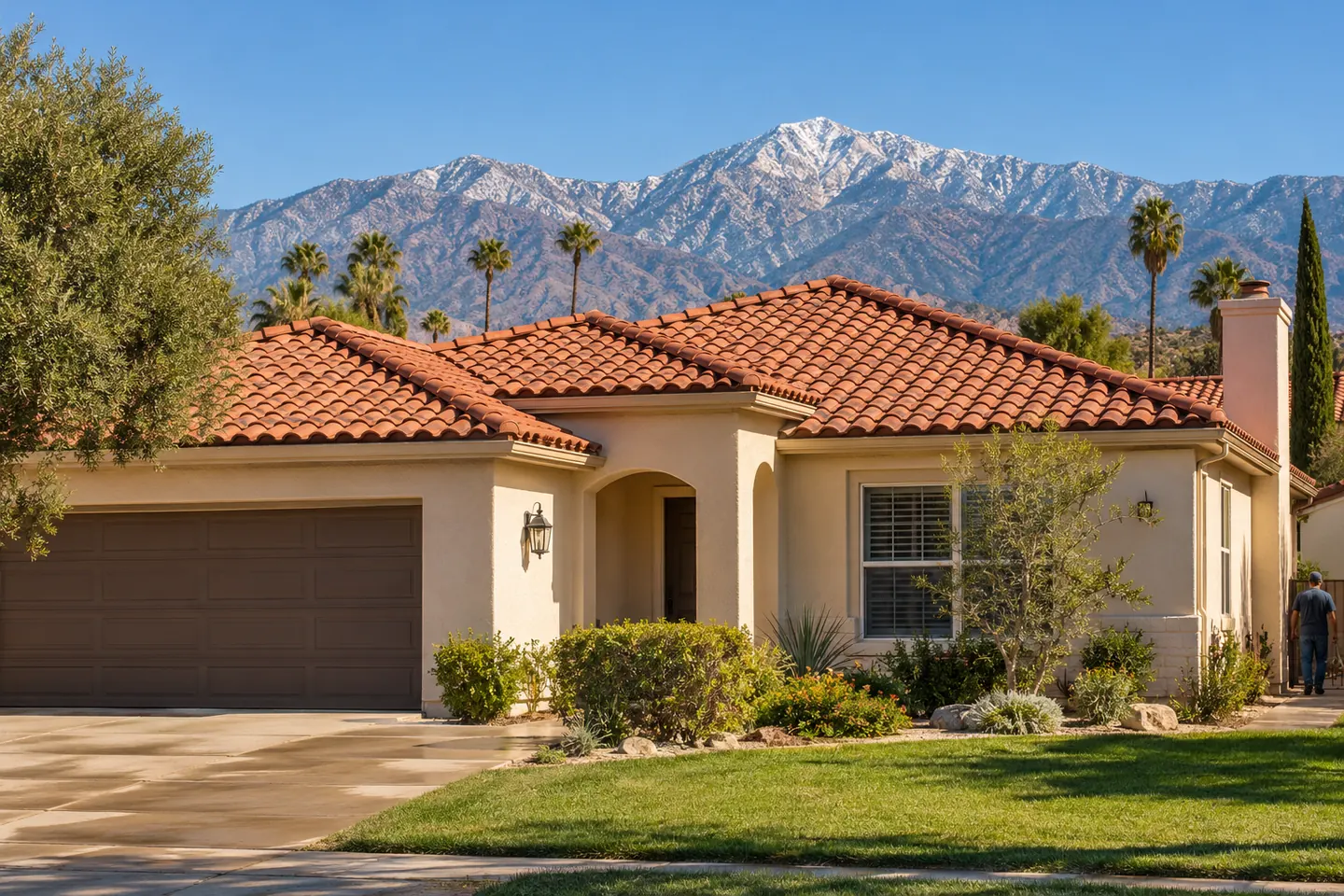
Common questions, plain answers
Do you cover cities outside this list?
These eight cities are where we regularly line up roofers. If your home is just outside them, call (909) 417-6201 and ask; we will tell you honestly whether we can help.
Does each city have its own roofing permit rules?
Yes. Each incorporated city runs its own building and safety office and sets its own permit process and fees, while state codes such as the California Building Code and Title 24 apply everywhere. Your roofer should know the local process, but you can always call the city to confirm.
Are some of these cities in wildfire hazard zones?
Parts of several are, mostly near the foothills, including the north end of San Bernardino, parts of Highland and Yucaipa. CAL FIRE publishes Fire Hazard Severity Zone maps. If your home is in one, ask your roofer what fire rating the new roof covering needs.
Can I get a roofer to come out in Yucaipa or Redlands as easily as in San Bernardino?
The contractors we refer work across the east valley. Scheduling depends on their workload and the weather, especially after a storm when many roofs need attention at once. Call early and describe the problem clearly so the urgent jobs are seen first.